
ACCESS NL > Features > How the Netherlands Became My Home
How the Netherlands Became My Home
2026/06/24 | By Nataliya Volosovych
I stood in the bay window of an empty ‘fully furnished’ apartment in Hillegersberg, Rotterdam, and looked out at a lake shaded by old pine trees. It was August 2010 and Rotterdam, wishing to make a favourable first impression, had arranged itself beautifully. The water was still, the trees dignified, and the apartment behind me contained almost nothing one could describe as furniture.
My husband and I had just moved from Florida to the Netherlands. We had chosen Europe to find a place we could call home, start having children, and live closer to Ukraine. We had serious reasons for coming; Rotterdam answered them first with beauty, then with paperwork.
For the first month we camped indoors: garden chairs, a built-in bar table, and an air mattress that received us nightly with a sigh of moral disapproval. The big American things had not come with us. Those generous monuments to space and comfort were sold: the house, the backyard, the corner sofa large enough for a minor conference, the sort of car that made one feel privately responsible for the price of oil. The Netherlands accepted us kindly enough, on the condition that we become smaller, more vertical, and better at parking.
This was not our first Atlantic crossing. We knew the rituals: find food, misread official letters, learn the rules, and, most essential, find your people. My husband kissed me in the doorway and went off to the university, where his professional self had already been given a chair. I remained in the apartment; there was no chair for my professional self yet, which was perhaps just as well, since ours were meant for the garden.
I looked again at the lake and rehearsed: “Hi, I am Nataliya, and I am a photographer.” It was true, and not yet entirely convincing. Truth, when newly transplanted, sometimes looks pale and needs staking, watering, and protection from the wind.
Step by step, people appeared. They helped me explain to the Belastingdienst what I intended to do with my love of photography, and why this love apparently required VAT. I spoke not a word of Dutch then; eagerness, I discovered, is not always enough when the tax office cannot comfort you in English. Everything took forever. I was still living by the time rules of my American corporate life, where everything was due yesterday. Eventually I understood that I could not measure this country by the laws of my previous life; irritation made room for curiosity. I read about Rotterdam and the Netherlands: the water, the war, the rebuilding, the stubbornness, the freedom.
Ukrainians and the Dutch are not alike in style, but both understand independence and the will to preserve what is theirs. Our neighbour Luc gave me small lessons in Dutch civilization: how to pronounce broodjes, what gezellig means, and why the word refuses to be translated without losing half its warmth.
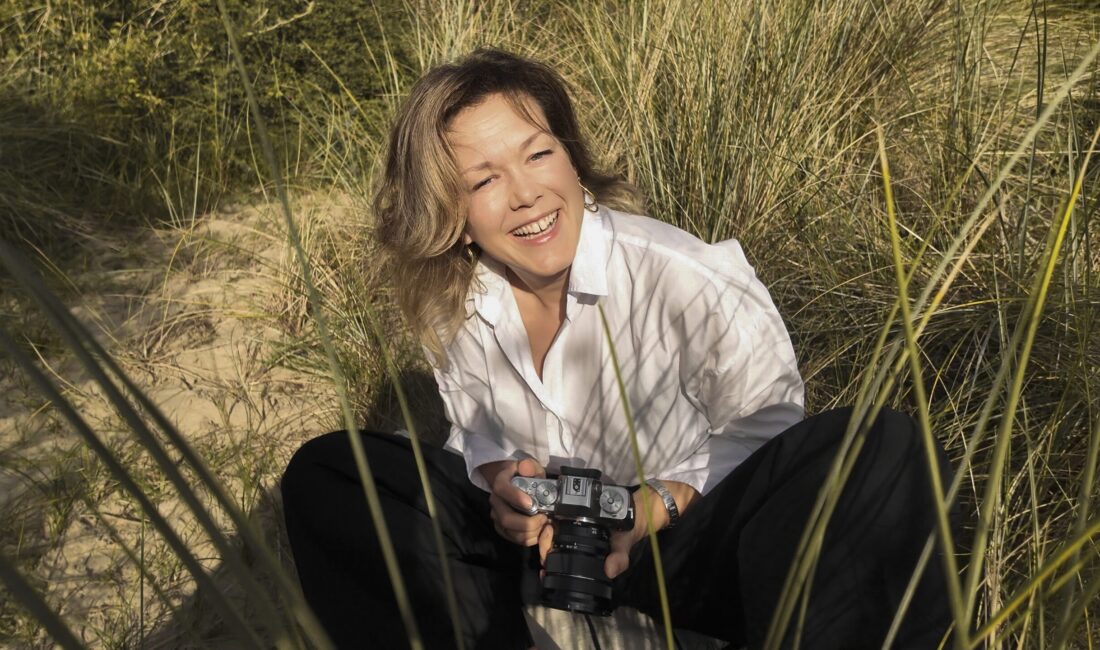
Our neighbour Luc gave me small lessons in Dutch civilization: how to pronounce broodjes, what gezellig means, and why the word refuses to be translated without losing half its warmth. Then, in a nearby park, I stopped to pet a Husky puppy and photograph it. It was one of those small acts that destiny performs while pretending to be about a dog. Through that puppy I met Caresse, my first dear friend here, later godmother to our first child, and still chosen family.
After attempt number three, I registered my business and began offering photography from our living room, which was eventually shared with two babies and surrendered to disorder. Later I learned a new word antikraak and moved my work out into the world. Fifteen years passed. The business grew, survived recessions and a pandemic, and now my studio is in The Hague, on the first floor of MyLimaLima. There are frequent hugs, occasional coffee in the kitchen with Eloise van Oranje, and, at last, confidence in my own introduction. I cannot imagine being anybody else. Our boys grew up with Dutch as their native language. They help me build phrases when I cannot feel the deeper meaning of a word, and still laugh kindly at how their father pronounces trui and ui.
The realization that I was home came recently when my husband took an assignment in Spain and gently suggested that we all move there. I listened carefully to my body, and it answered with heimwee. Homesickness. Not for Ukraine, my first shore, but for here. My mind showed me a fast-rewound film: no language, no friends, no network, no clients until I found them. A clean slate did not frighten me. What frightened me was the thought that I might never again find this rare feeling an immigrant sometimes receives after leaving the shores of her native bay: being at home.
Now I sit on my couch, still in my pyjamas, surrounded by tulips and peonies brought by a friend for no particular occasion. For now, I share my family between two countries. But when I step off the plane in Rotterdam, I feel it before I think it. I am home.
Nataliya Volosovych
Ukraine, accompanying partner
ACCESS Stories is a monthly newsletter with the heartfelt intent to help you make the most of your new lives in the Lowlands. Visit our Features page to explore all published stories.


